
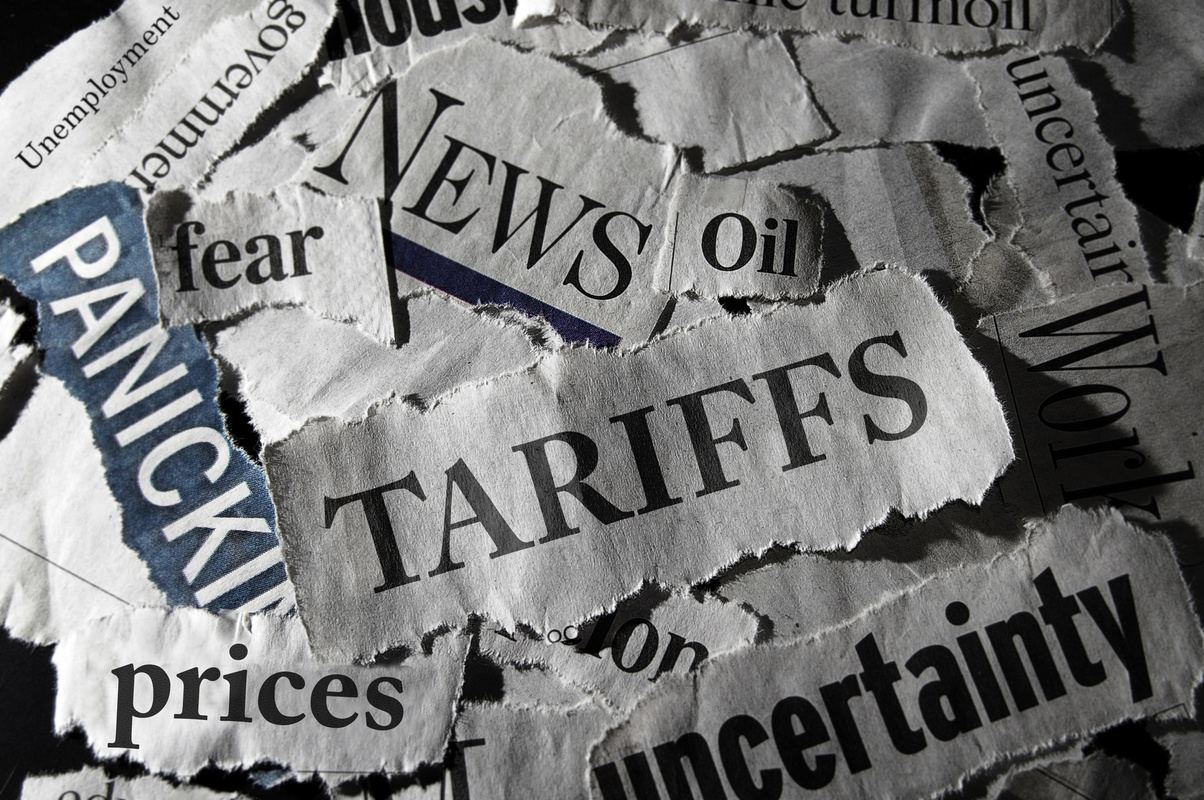
Tariffs the word of the year!
Certainly, the topic of conversation in recent times as the world awoke to the phrase ‘Trumps tariffs!
Were you caught unaware wondering what’s this all about, if or how does it affect me, as a consumer and or Business owner? What are the implications!
Here we go, Tariffs explained!
Tariffs are taxes charged on goods or services coming into a country (i.e. bought from other countries). Generally, they are a percentage of a product's value and is a duty (tax) imposed by the government. Typically, the cost is usually passed on to the consumer.
How tariffs apply differs between countries. Australia’s rates are relatively low, around 5% on most goods, relying on GST and other methods depending on the type of goods and any free trade agreements.
That wasn’t always the case. The direction and makeup of Australia’s trade changed over the past fifty years, evolving in response to shifts in the global economic climate and our economy. For example, in 1997, the rate of assistance was just 5% compared to 35% in 1973 and 22% in 1984.
Looking back, most developed countries, after World War 2, gradually removed major tariffs, embracing free trade. Australia was the exception, keeping high tariffs up until the 1990s to protect the manufacturing industry. An example is the electronics industry. Australia's largest company, AWA, up to the 1950s, prospered with the help of government assistance. The government supported a domestic electronic industry and protection of Australian jobs.
History and economic policy tell us that this approach is fraught with problems.
Cost of production is driven by two factors, labour costs and economy of scale. Simply put, the more you sell, the less it costs to produce each item. In the 1970s Australia, population of 13 million, was a small market and labour costs were significantly higher than the Asian markets. We couldn't compete. From 1975, throughout the 80’s the tariffs were slowly dropped and the industries they protected disappeared.
With deregulation during the 1980’s and 90’s Australia's economy was opened up to the world and with new investment and global demand contributed to strong export growth.
Other developed western countries, including UK and USA took a similar path. We all pay less for goods but the cost has been at the expense of many industries and blue-collar jobs.
It is this situation that set Trump on his mission, promising in 2016 to bring manufacturing jobs back to America. He praises the merits of tariffs, trade duties, as a means of raising taxes and a way to drive companies to produce goods in America.
This is now being played out. April 2, 2025, President Trump announcing what he called a ‘reciprocal tariff’ strategy. This designed and necessary to what he claims is decades of unfair trading relationships that disadvantaged American workers and manufacturers.
No countries are out of scope, nor it seems any product. Currently the US and China are going head-to-head, tit-for-tat, over tariffs that experts say could deliver cheaper Chinese made products to Australian consumers. Electronic goods, phones and cars one headed to the US could instead exported to Australia resulting in lower prices! Watch this space!
How do and will these new tariffs and trade policies affect Australian Business?
The US has announced new tariffs on imports from Australia and global trade partners. Effective from April 5, 2025, it has imposed a 10% baseline tariff.
It seems nothing will escape with some items attracting extreme penalties. Movies suggested as 100% tariff and pharmaceuticals are under the spotlight.
For more information the Dept of Foreign Affairs and Trade (Australian Government) provides updates, help and resources.
In conclusion, markets change and shift over time, so do the commodities we export and import. Our trade remains a crucial contributor to Australia’s economic health and wealth. Iderally, underpinning this are fair taxes and tariffs to provide a level playing field with benefits for all players.
 Your Accounting Partner
 Your Management Accounting Partner
 Your Expansion Engineer
 Your Special Projects Partner