



 If you have ever attempted to row a boat, that is, not taken a cruise on a luxury 5-star liner, you will know how challenging rowing can be! It requires specific skills of precision! You have to pull on two oars simultaneously with equal force to navigate the water, move your boat, and safely reach your destination.
Are you a Leader? The same is true. Consider this analogy!
The metaphor of two oars of leadership represents People and Results. A Leader must simultaneously balance the needs of their Team with business goals. It takes this blend to lead effectively while moving steadily forward.
Leadership is engaging other people, staff, and teams to deliver desired outcomes. Leaders operate within a system, an organisation that requires the commitment and energy of competing forces (Leaders and Teams) to deliver results. This can be described as a yin-and-yang existence. A relationship between leaders and followers with tension and complexity but with a focus on the same goals.
Simply put, when you lead, there are two basic dynamics at play. You have control of the oars, but effective leaders apply equal force to bring people along while also setting and meeting Business results. It's all about balance. Like a rowboat, if you pull too hard on one oar, you will spin around in circles, going nowhere. Sound familiar? Have you experienced that?
Come on board!
The People Oar
This oar focuses on the human, empathetic side of leadership. This means;
Read more... In a time of uncertainty, conflicting world events, politics and the rapid adoption of AI we are already seeing that 2025 is a time of disruption and it’s not ‘business as usual!
In this rapidly changing environment horizon scanning, course correction, agility and adaptability are important skills for Industry leaders.
A ‘typical’ small Business leader in Australia in 2025 is likely to be a tech savvy self-believing entrepreneur with a strong focus on digital marketing, the customer experience and sustainability.
Aligned with this profile is human-centred leadership that prioritizes employee needs, wellbeing and promotes practices to foster a safe, positive work environment. There is emphasis on diversity and inclusiveness within their teams.
What to look for. Do you recognize these attributes in yourself?
7 Key characteristics are:
- Tech savvy: includes keeping abreast of new technology, being open to improvement or if needed seeking advice from expert others. Example AI, what’s it all about, what does or can it mean for my Business!
- Digital fluency aptitude understanding and leveraging technology to drive innovation and decision making. Such as utilizing online platforms and social media applications. E.g. data analytics to reach customers, manage operations and respond to changing market trends.
- Agile and Adaptable: leads change, adopts flexibility in operations and strategy to respond to market shifts and emerging trends. Embraces continuous learning to stay relevant to meet the challenges of a changing landscape.
 The opportunity to step up to a Leadership role has finally presented itself.
Are you ready, do you have the necessary skills and abilities?
Stepping up to a leadership role requires a shift from managing tasks to driving strategic intent, developing talent, and embodying emotional intelligence. Effective Leadership demands building trust through respect and integrity and adopting an open and growth mindset to embrace change and the challenges presented.
Are you prepared?
If you have answered yes, you will have put in the hard work to transition from being a highly-praised manager or key Team player to developing the skills needed for a leadership position. You have done the hard yards, developed your skills and applied your qualities and traits that make for an effective leader.
Let’s look at 7 Vital Leadership Skills.
-
Mindset shift – focus on being a leader of others, focusing on organizational impact and outcomes. This takes a move from being a subject matter expert, task master, assigning and managing jobs.
Read more...

Lessons in life and Business come from personal, learned experiences, peppered with successes, failures and everything in between.
And we know leaders come in all shapes and sizes and leadership has many styles. Amongst those are the ‘self-taught’ leader.
These are the self-starters, self-motivated that often morph or merge into leadership positions, often beginning on the job, at the coal-front of Business or as small Business owners. Many don’t start at the top but go about their tasks with commitment forging a pathway that fosters development and growth.
Characteristics, traits and habits include:
- self-directed
- self-belief
- interested and open to learning
- flexible
- resilient
A desire to go further, gain skills and knowledge, improve and succeed drives their endeavours, sometimes in small steps but still with purpose and an end goal.
If you are a small Business owner, ‘self-made’, you might recognise yourself.
And speak with ‘self-taught’ ‘successful’ leaders and many will share the following 7 ‘takeaways’.
Read more... Listen to the coffee and backroom chatter and you will find the common perception is that leadership is all glitz, glamour and perks! Listen up! That is indeed a misconception!
In reality, leadership involves hard work, tough decisions, and routines punctuated with often challenging and unexpected events. There’s more grit than glitter! If you were a Leader during the uncertainty and disruptions of the COVID epidemic, and more recently, US tariff threats, you would know it isn’t glitzy or glamorous, sprinkled with perks.
Strong leadership can be best described as gruelling, demanding, with a raft of responsibilities that often require significant personal change and sacrifice. Simply said, leadership never ends. It’s a continuous journey of highs, lows, wins, and losses requiring self-reflection and improvement to be a true, effective leader.
The unglamorous realities of Leadership include:
-
Accountability: The buck stops with you. The Leader is ultimately responsible for their team's successes but also accountable for failures. The pressure can be immense, requiring reporting to a range of stakeholders.
-
Difficult decisions and hard calls. The leader carries the burden of being the bearer of bad news. Announcing job cuts, cancelled projects, and having awkward conversations are all part of the role. This emotional baggage can end up falling on the leader’s shoulders, not seen but felt.
Read more...
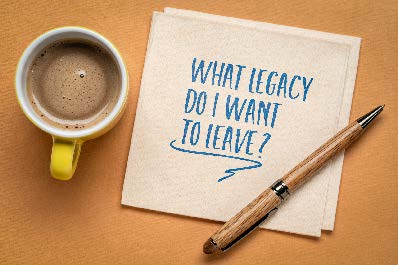 In simple terms, leaving a legacy is ‘something’ handed down from the past. Depending on the context, it can be the impact on future generations, the inheritance of property or money, or outdated technology.
If we zoom in on this description, the takeaway is that true legacy is not about monuments, glory, fame, or wealth. A true positive legacy is the lasting imprint you leave behind through the values you instil, the lives you touch, and the positive impressions you make. These are enduring and intangible contributions.
In Leadership and all walks of life, leaving a memorable legacy for all the ‘right’ reasons is something money can't buy, or win in a raffle!
In recent weeks, we have seen this true example of legacy demonstrated in the words and actions of two renowned people: an ex-footballer and a cancer research professor. Both were cast into the public spotlight for their heroic and staunch stand against adversity, fighting for their lives against terminal illness.
But it is the way they went about this fight that has inspired so many. Both displayed and demonstrated behaviours that won the hearts, support and following of many, including family, friends, communities, and strangers.
Read more... Big Business, small Business, Sporting organizations and everything in between, when it comes time to identify potential or new Leaders, what are the secrets to successful Leadership transition? Importantly, what makes Succession Plans work?
In reality, successful succession isn’t simply following a plan. Transition and successful succession are about honestly assessing what the organisation needs next, what it needs to take it forward.
That raises questions, ‘who’s in the room? Is the ‘nominated’ candidate suitable and prepared, able to deliver that? Answer, sometimes yes, sometimes no!
Read on!
Family Businesses, and you may be one of those who have realised the importance of Succession Planning and taken the necessary steps for a smooth transition. You will have instilled family values, strong governance structures and supported all family members to nurture their aspirations and ambitions. Role rotation, training, and shared opportunities are important to achieve this outcome. Everyone is a winner!
Examples of succession plans that have worked where highlighted in the story of leadership transition headlined, ‘WA Cricket’s belief in coach Adam Voges is a perfect blueprint on how to get it right’. In this article, Voges was praised as ‘he epitomises excellence in the world of head coaching’.
Other examples.
Read more... Crisis and crises do occur despite the best laid plans! And they happen in all streams and areas of life, Business, leisure and personal.
As a Leader, a crisis brings additional layers of complexity, responsibility and difficulty, as you are called upon to act effectively. Your Team and employees look to you for guidance, support, and answers!
Most successful Leaders embody a range of certain traits and capabilities, adapting their leadership style to best respond to the needs of a specific situation. They can inspire, influence,and know how to act decisively.
This moment has arrived. Are you prepared, equipped? Do you see yourself in the following?
Research and feedback from various workforces have identified the following 7 qualities, capabilities and actions they want Leaders to demonstrate in times of crisis.
-
Calmness is key under pressure: Keeping a level head and staying composed will help avoid panic reactions. Displaying patience and being mentally stable will reduce anxiety and create a less stressful environment for all. The opposite, agitation, being rattled and overly excited, will have a detrimental impact on everyone.

Leaders and Managers do you see yourself in the following!
Are you a good Leader?
A good leader has integrity, courage, respect, compassion and resilience, qualities they display, earning trust and loyalty. They communicate the vision and positively influence others. Learning agility is a strength.
Check these Leaders Traits and Characteristics:
- Leading by example- earning the respect of others by your actions, reliability and honesty
- Enthusiasm – displaying positive energy, interest, motivational
- Self-awareness – knowing and understanding your own strengths and weaknesses
- Decisiveness – ability to make decisions quickly if needed
- Avoids micromanaging – steps aside, has trust and empowering staff
- Open minded - to new ideas, knowledge and continuous improvement
- Fairness – treating all fairly, without discrimination or favouritism
Being an Effective Manager:
Read more... Proverb: the fastest doesn't always win the race, nor does being the loudest voice in the room necessarily mean respected authority!
Have you experienced this loudest voice? The Leader who never stops talking, has an opinion and controls every conversation, dominating the meeting agenda. This showmanship is tedious, tiresome, and boring.
Enter the ‘quiet’ Leader. This Leader leads without fanfare or fuss, doesn't have to control every discussion or speak the loudest to be heard or followed. Respect is gained by quiet reserve, not the focus, bellowing instructions, and hogging the conversation.
As modern workplaces become more fast-paced, challenging and complex, the Quiet Leader is finding their place providing reflective and thoughtful leadership. Leadership is not about how often someone speaks; a key strength is knowing when not to speak!
Is this you?
6 Key Characteristics, Traits and Attributes of a Quiet Leader
-
Leading by example: Authenticity, demonstrating values through presence, and action, acting as a stabilising force rather than the centre of attention. They signal authority before speaking through non-verbal communication, and subtle cues that communicate composure and authority without dominating the room or conversation.
Read more...
 At our last Staff Christmas Party, it looks like Cinderalla has lost her shoe!! Have you experienced a memorable Staff Party recently?
If you are an Employer as we embrace the fun festivities of Christmas celebrations are you ready, ready for what can be a very silly season for some.
8 Top Tips for Staff management during the ‘Silly' Season:
- Establish clear guidelines, codes of conduct, for what is acceptable and unacceptable behaviour in the workplace. Importantly ensure these are communicated directly to all employers so there is no misunderstanding or confusion about behaviour at both the workplace and work-related functions.
- HR Policies, Health & Safety. Now is a good to visit all your HR policies to ensure they are current. Update as needed and adopt and implement any gaps. For example, most of society are now engaged in social media activity that can come into the workplace. There needs to be a clear policy set around this.
- In advance, actively promote and communicate your HR policies to all employers, raising awareness of sick leave, drug and alcohol policies. Conduct Information sessions and refresher training courses.
- Social media policies need to be publicized. A reminder that ‘party-mood’ actions, comments, tweets and posts can be detrimental. What is thought funny by the ‘instigator’ may not be considered as such by those targeted. ‘Bad media’ can also reflect poorly on the organization.
- As an Employer support and join in the spirit of the Festive season. No-one likes a Christmas-gringe. Small things, such as decorations can add to the ‘spirit’.
- Lead by example. Set the standard with your own actions and behaviours. If organizing a function consider offering pre-paid taxi vouchers, have responsible drinking bar limits and adopt similar safety strategies.
- Understand not everyone celebrates Christmas and make sure those not joining in are not pressured by others to do so. Promote a workplace environment that is tolerant of all beliefs.
- Planning for leave. Support staff taking leave during this period as pre-organising can help with managing the workload and reduce ‘sickies’
Apply these simple strategies and you will help make this ‘silly’ season memorable for all the right reasons.
Read more...

Recruiting staff has never been more challenging and on the other side of the pandemic smart small Businesses are doing it smarter by adopting a more strategic approach to this task. Rather than ad-hoc and piecemeal, the process is now more refined and organised. This framework has developed shaping the strategies for attracting and recruiting the best talent.
Recruitment Strategies for small Business include:
- Social media opportunities: Post on all platforms. Facebook, Instagram, LinkedIn, these are the super highways of communication. Put the word out you are hiring, looking for the ‘right’ people to join and help build your successful enterprise.
- Sell your Brand & Culture: in all mediums, promote, show and tell what your Business is all about. Be the messenger, the story teller sharing the values, vision and what makes it great place to work in. Your job descriptions should reflect this professional and positive culture, making it attractive to applicants.

There comes a time in most Family Businesses when it’s time for the ‘founding’ members to let go, step aside and hand over the reins or baton!
Letting go is a subject of conversation, raised often, particularly when there are problems with the 'changing of the guard'!
This situation, handing over the reins, despite good intentions, often becomes complex and complicated when the ‘founder’ holds on too tightly or for too long. Simply said, they have trouble letting go!
This raises the question ‘why is that so?’
Loss of Identity: Erosion of identity, rather than management, is often the root cause. Stepping away can be a huge change for the owner who has often given their life to building the company. It has been their primary purpose. Succession can feel more like an existential crisis rather than a professional milestone. These feelings should be considered and taken seriously. Seek professional health guidance if needed.
No post-retirement plan: Yes, there has been talk of taking it easy, going on a cruise or catching up with old friends, but without meaningful activities and engagement, founders tend to linger on at the Business. A retirement plan plans for retirement. Being proactive, finding ways, purpose, and making other investments to fill their time.
Read more...
We previously explored this topic ‘Handing over the Reins- Letting Go!
We highlighted problems that sometimes surfaced with this ‘changing of the guard '; handing over the baton was very challenging for some.
That raised the question, ‘Why is that so? ’
We identified contributing factors such as;
-
Feeling a loss of identity, importance, self-worth
-
Control issues – no longer making decisions or contributing
-
Fear of financial insecurity
-
No Post –retirement planning. Fear of irrelevance.
-
Distrust in the next generation.
Let’s look at a Case Study:
Bill, the founding member of a Panel Beating business, is struggling, refusing to let go of the reins. Despite an existing Succession Plan, he is adamant that he should continue and remain head of the operation.
Read more... Preparing for a wedding, a major event, an overseas holiday or a career pathway! It’s all in the planning. It’s developing a process of deciding what, why, and how to achieve something and the best way to go about it.
There are no boundaries for planning, applying to a range of activities and interests, including operating a Business.
Is that you? If you run a Family Business, it makes good business sense to have a plan, a blueprint for the future.
And yes, it’s all in the planning. Let me introduce you to Family Business Planning and Succession Planning.
There are some simple steps to follow.
Get your house in order!
It begins with a review, an honest assessment of the current situation. Asking the questions, seeking clarity, and, more importantly, acting on the results.
Read more...
Culture in any setting, personal or professional, recreational or business is a powerful influence. It can be good, bad, positive, or negative, healthy or unhealthy.
Winning, or losing culture, understanding both is vital to being the best you and your Business can be. The right culture can make or break your Business!
Definitions and key differences:
A winning culture is exemplified in successful Organizations in any industry. Corporate or sporting teams' culture is demonstrated in how things are done and includes both the spoken and unspoken assumptions and values that guide practices and behaviours.
When adopted a high-performance culture, team collaboration, employee motivation and boosted productivity result in successful, winning outcomes.
On the other hand, a losing culture can surface when members are pitted against each other. It's everyone for themself, and self-survival threatens unity. This can happen in any setting. For example, when a Company introduces cost-cutting measures where personal performance and jobs are under scrutiny, the ‘winning’ team culture is lost.
The Impact
When this ‘winning culture’ mindset is shaken, particularly threatened by a team's poor performance over a long time, a losing culture can permeate taking its toll both on and off the field. Everyone can be affected, player, team and leader morale. This has been highlighted recently with some football players speaking out.
In the workplace. ‘losing’ culture symptoms include disengagement, negative atmosphere, high employee turnover and sometimes toxic environment. Poor attendance and attitude destroy team-thinking, connections and output.
Read more... Your Accounting Partner
 Your Management Accounting Partner
 Your Expansion Engineer
 Your Special Projects Partner
 Eligible corporate tax entities can claim a refundable tax offset in 2026-27 tax returns to help with their cashflow.
  Is that you, your Business!