



Getting away, holidays, travel it’s easy for some, simply, plan, book, pack and go!
But what does it mean for Family Business owners. How do they take time off, get time away from the Business to take a much-needed holiday!
Who takes care of Business when you and family members are all away!
It's never easy, particularly if you are an enterprise that can’t simply shut up shop and head off.
And there never seems to be a right time to take a well-deserved break. Always needed, Family Business operators tend to be the Business, investing time, hardwork and their passion. Exhausting and consuming!
But evidence shows we all need time to get away, to recharge, re-energise and gain a fresh perspective. Owners like employees need work-life balance, with longevity and the health of self, Family members and the Business critical.
When and how to plan and take vacations will depend on circumstances.
For example, factors including, business structure, type of Industry and location are key considerations. Some Family and small Business owners may decide the Christmas or Easter periods are family value special times and choose to close shop.
This arrangement will be widely advertised in advance, with pre-orders taken and delivered to counter time-away. Importantly, customers are warmly acknowledged thanked for their patronage, present and future. Other operators may take their vacations during slow or off-peak periods.
If you are one of the other Family Businesses it might be a balance of getting away with some check-ins. Importantly it’s about planning what your ‘accessibility’ is or isn’t!
Getting away! How to make it happen?
Try these 9 Simple Steps
- Pre-Plan leave with Family and Staff
- Prepare your Team

Most Small Businesses will experience ‘cashflow challenges’ those times when the sea of money seems to be adrift, with more money going out of the Business than there is cash coming in!
If this sounds familiar you are not alone with ‘92% of Australian small Businesses experiencing negative cashflow with owners struggling to pay essential costs such as rent and wages’ (Insight report July 2022). This is financial pressure small Business doesn’t need!
The good news is that there are ways to help stay afloat! With foresight and adopting sound financial management strategies some common mistakes can be avoided and obstacles overcome.
Here are some common challenges with our Top Tips to help you overcome them!
- Profit margins: Particularly relevant in the current inflationary spiraling pricing cycle, it’s critical to have true-cost pricing. Don’t let your profit margins be eaten away by increasing costs.
Tip: Regularly check the cost of goods and products and determine realistic profit margins by setting prices not too low or too high. Pricing points are needed to keep you competitive and in the red. Offer value for money and your customers will keep coming back!
- Overdue payments: monies due to you: Slow and late payments pose the greatest risk to small Business. Cash in keeps the money flow flowing, without it the cash river dries up!
Tip: Have an efficient invoicing and billing system in place, one that generates accounts at point of sale and offers various payment methods. Electronic systems can also monitor receipts and overdue accounts allowing you to better manage and avoid late payments. Keep on top of your debtors ledger, remember you are running a Business.
- Personal and Business financial matters: Mixing money, personal and Company transactions is fraught with danger, including relationship friction and can easily lead to ‘robbing Peter to pay Paul’!
Tip: Keep separate systems and records and avoid ‘borrowing’ from either. Makes it simpler for all concerned including for providing true and accurate Business financial reports, taxes and audits.
Read more...
‘Tis the season to be jolly’, and ‘it's the most wonderful time of the year’!
Yes, it is!
But after the festive celebrations, if you have overindulged, you now might be singing a different tune. With the ease of buy today, pay later, choose, click, collect, are you humming ‘Singing the Blues’!
If that’s you, you won't be alone. Many Australians are reported as facing Christmas holiday debt that can take months, years to pay off.
With the magic of Christmas spirit it’s easy to be caught up in the euphoria and excitement of festivities and with the joy of giving gifts we get carried away. Tapping a credit card or taking up bargain offers too good to refuse, along with celebrations, parties and outings that all have a cost.
Yes, unfortunately, spending overindulgence does come at a price! It all adds up to a debt hangover. Sound familiar? You find yourself struggling to make ends meet, and it’s overwhelming, causing strain on your health, wallet and often relationships.
With the arrival of bills, particularly those highlighting accounts outstanding, now due, ‘pay to avoid legal action’ it’s time to find solutions for dealing with your Debt hangover.
And in a time of cost-of-living pressures getting on top of your finances is a positive step forward. Consider the following;
Here are 5 tips to guide you.
- Get help if needed: Feeling overwhelmed, need advice, contact a professional financial advisor. They have the expertise to guide and support you. Don’t wait until Debt collectors are knocking on your door.
- Consolidate your debts: if you are juggling multiple accounts, debts, consolidation may be an option. For example, with several credit cards there might be the opportunity to move balances into one. Speak with your providers to see what deals are on offer.
 More specifically, navigating uncertain economic times!
As the conversations become more despairing with talk of continuing economic turmoil, rising inflation and a looming potential recession, it’s easy to become bogged down in a doom and gloom mentality. This can soon fester into negative market paralysis, with consumers and investors pulling back! It’s created a volatile situation for everyone!
But there are ways forward. If you are a small Business owner now is a good time to take a deep breath of optimism, get off the back foot and seek ways to counter these challenging events. This doesn't mean putting on rose-coloured glasses, being overly optimistic or ignoring the facts.
7 Key strategies include:
1. Take Stock – of product inventory, premises and include a Business entity assessment. Is the model best serving your interests? Are there product lines or services that are underperforming? What are the best sellers, or popular items?
Additionally, are you prepared? As shoppers start to stockpile their pantries, if you are affected, do you have extra stock on hand?
2. Customer care – make your customers the centre of attention. Focus on existing clients to maintain revenue and reward them with loyalty and other add-value incentives. Provide service excellence with a smile, delivered by enthusiastic and well-trained staff. Create a friendly, welcoming vibe and encourage, take, and listen to customer feedback.
3. Financial resilience – It's all about the bottom line!
Read more... Inflation! Yes, it’s back! Not happy Jan!
And the question everyone is asking, ‘Who is to blame?’
Before we go down that bunny-hole let’s reflect.
We first explored this conundrum back in March 2024. We examined ‘Inflation and Interest rates 70 Years 1970 to 2024’ then followed with ‘Inflation - What’s it all about! Where did it come from?’
It was an interesting and enlightening journey that revealed, amongst other things, the policy adopted to beat inflation.
I.e. ‘In Australia, the Reserve Bank (RBA) conducts monetary policy and is a means to control inflation. This policy aims to achieve goals of price stability, full employment and economic prosperity and welfare of Australians. It does this by targeting inflation at between 2-3%. By raising interest rates, the Reserve Bank aims to deter consumer spending and limit the purchase of higher risk assets.This policy was applied in 2023 with total rate increases of 1.25% per annum.
In this strategy framework, last year, the Reserve Bank (RBA) cut rates three times as inflation declined. The last rate cut was in August.
Time passes, and although inflation has fallen since its peak in 2022, it has risen in the second half of 2025, with annual inflation running above the 2.3% target on all measures. Inflation! It’s back!
To counter this, at its first meeting in February 2026, the Reserve Bank Board lifted interest rates by 0.25% percentage points. The new cash rate is 3.85%, up from 3.6%.
The RBA issued a statement saying, ‘it considers inflation is likely to remain above target for some time. Capacity pressures reflect, in part, the greater momentum in demand seen in recent months. Growth in private demand has strengthened substantially more than expected, driven by both household spending and investment.’ ‘Activity and prices in the housing market are also continuing to pick up’, while conditions in the labour market were also a ‘little tight’.
There you have it! And begs the question, who’s to blame? That has seen finger-pointing and accusations played out in the media.
-
The RBA Governor suggested ‘the pickup is due to a combination of factors across a broad range of components and sectors’ and was reluctant to assign blame or accept it.
- In the Reserve Bank Statement on Monetary Policy overview, February 2026, it was stated ' Australian economic growth and inflation have been stronger than expected compared with six months ago.' 'some of the increase is driven by capacity constraints' .
-
Inflation is impacted by ‘a time of uncertainty’ as nervous global markets and investors respond to the changing trading environment. It’s a fluctuating landscape with no rules!.
-
An influx of English cricket tourists' spending during the recent Ashes tour series hit the headlines as ‘Blame the Barmy Army’ for the rate rise. Claims that associated spending on accommodation, food, flights and related items were a driving force behind a rise in inflation.
-
Household spending over the year remained high, up 5% compared with December 2024, according to ABS Business stats just released. There are recent declines in some areas post-Black Friday and promotional sales, while demand in others rose.
-
One Tech retail giant attributed its recent record sales to customers defying the cost-of-living pressures and upgrading to the latest computers, phones, games, and other gadgets.
- Record high ‘runaway’ Government spending was stated by the RBA Governor as fueling inflation, contributing to the need for this latest rate increase.
-
Treasurer Chalmers has argued that private sector spending is fueling inflation, not public sector spending.
-
Years of low and weak productivity growth are part of the problem equation.
So, what does this mean, how are we affected? Consider these differing views, thoughts, and opinions.
-
Some experts suggest that much of the recent rise in inflation will be temporary.
-
Others say mortgage holders should brace for more rate rises this year.
-
The RBA expects headline inflation to climb higher to 4.2% by June, up from 3.8% in 2025.
-
Governments to help lower inflation can reduce spending levels in the near term and, in the longer term, help boost the supply side of the economy.
-
Keeping inflation low and around target is vital in terms of maintaining and maximising living standards in Australia.
-
In the longer term lower and more stable inflation can ultimately reduce borrowing costs over time.
-
Increased productivity is a way to dampen inflation.
- Fighting inflation is harder in a tight jobs market, with lower than average unemployment and rising spending according to a Reserve Bank spokesperson. The housing construction industry cited, with finding a tradie in WA, the example of a symptom.
-
Many households with large mortgages will feel the pain as related repayments increase. Additionally, the cost of living expenses also add to this financial pain.
-
Tighten your belt, throw your hands in the air, shop wisely and carefully! Are you suffering from cut-back fatigue? Or travel, take a holiday, buy a new car! How much you are affected, little or severvely usually depends on your financial circumstances. Always has and always will be.
-
Watch this space, rising inflation can be good for your superannuation. There's more to this in the finer detail. Speak with Blackburn Accounting your Family Business Specialist if you need advice on Superannuation and Retirement Planning and Business matters.
Whose to blame!
To sum up, strong private demand, robust consumption at the end of last during a time of low unemployment and not to mention the effects of high Government spending has fuelled inflation resulting in the latest rate rise!
Watch this space!
Join in the conversation. Terms to know include: headline inflation, capacity constraints, market conditions, volatile items, inflationary pressures, and discretionary spending.
Read more...
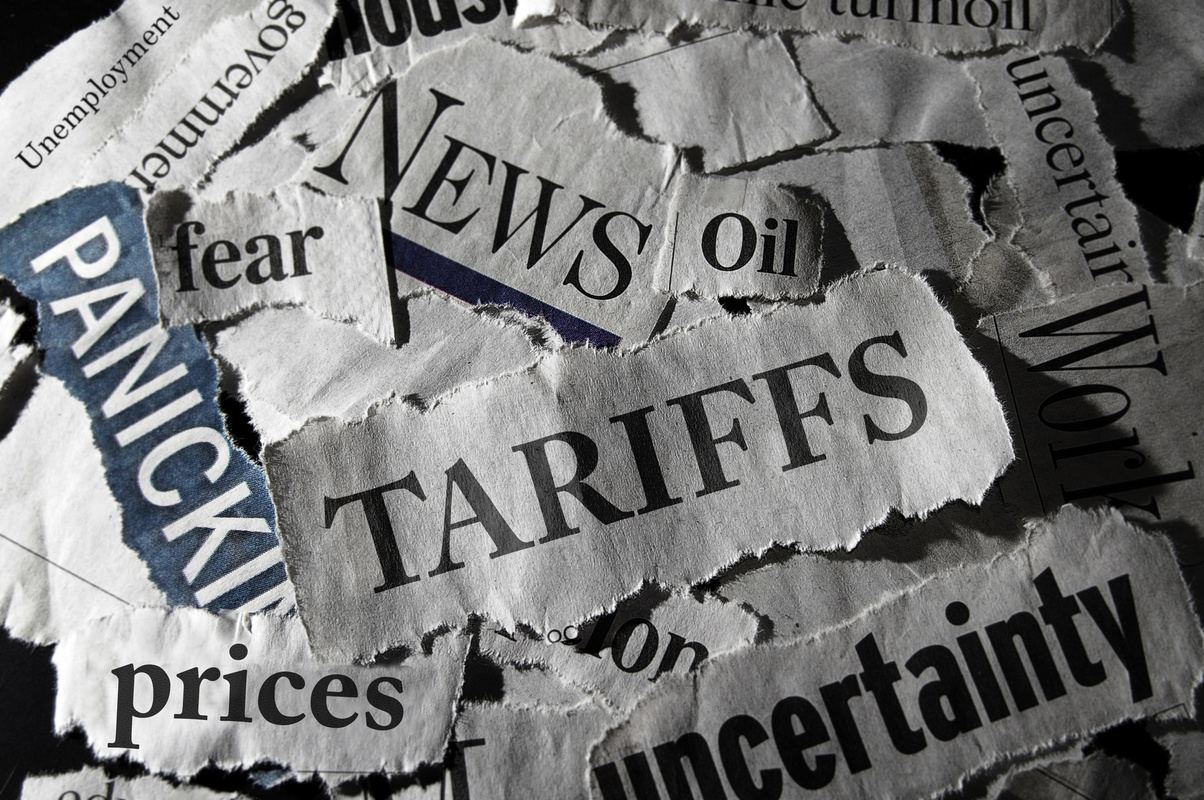
Tariffs the word of the year!
Certainly, the topic of conversation in recent times as the world awoke to the phrase ‘Trumps tariffs!
Were you caught unaware wondering what’s this all about, if or how does it affect me, as a consumer and or Business owner? What are the implications!
Here we go, Tariffs explained!
Tariffs are taxes charged on goods or services coming into a country (i.e. bought from other countries). Generally, they are a percentage of a product's value and is a duty (tax) imposed by the government. Typically, the cost is usually passed on to the consumer.
How tariffs apply differs between countries. Australia’s rates are relatively low, around 5% on most goods, relying on GST and other methods depending on the type of goods and any free trade agreements.
That wasn’t always the case. The direction and makeup of Australia’s trade changed over the past fifty years, evolving in response to shifts in the global economic climate and our economy. For example, in 1997, the rate of assistance was just 5% compared to 35% in 1973 and 22% in 1984.
Looking back, most developed countries, after World War 2, gradually removed major tariffs, embracing free trade. Australia was the exception, keeping high tariffs up until the 1990s to protect the manufacturing industry. An example is the electronics industry. Australia's largest company, AWA, up to the 1950s, prospered with the help of government assistance. The government supported a domestic electronic industry and protection of Australian jobs.
History and economic policy tell us that this approach is fraught with problems.
Read more...
Are you in the Business of providing Health and Fitness services that play an important part in our community! Most importantly, helping to keep us active, fit and well.
And are you a small Business owner that makes up this diverse and broad Industry offering a range of products, services and activities. An Industry of;
- Gyms, Yoga, and Pilates classes, just some of the popular activities tailored to improve our function, strength and well-being.
- Not to forget Boot Camps, Strength programs and Wall-Climbing for the more flexible and adventurous.
- Add Spa’s, Relaxation Clinics, Dietary Counsellors and Physios to this range,
- Along with providers of ‘niche’ market sportswear, clothing, footwear, accessories and specialist foods. Products and services delivered by Franchises, professional and 24-hour models to complete what makes up the Health and Fitness Industry.
If you have answered yes, I’m part of this industry, you already know the benefits of having a healthy body and mind and what it takes to achieve that. Regular routines, discipline, commitment and activities to build and maintain a stable level of fitness. That’s your daily regime! It takes time, skill and stamina!
And you need those attributes to deal with the behind-the-scenes demands. Running a Business comes with its own challenges and complexities, including, keeping up to date with Industry changes, trends while meeting your customers' needs and wants!
Staffing, Business Planning, Industrial Relations, Debtors, Creditors, Taxation, responsibilities and obligations, you are on a treadmill and thinking about it is enough to make you perspire! Don't forget compliance!
At the heart of your enterprise how comprehensive is your Business Plan. Is it a roadmap that directs you by clearly articulating your company goals, strategies and financial projections. Importantly, how to achieve your desired outcomes. Or are you left muddling thru the maze, lost in the business wilderness.
And how do you stand out from your competitors! Do you have a sound Marketing Strategy. A Plan designed to sell your brand, reach and engage your target audience, prospective buyers, by understanding their needs and wants. What is your USP?
Along with advertising initiatives, essential for any Business. Actively engaging social media platforms and other publicity mediums to promote and showcase your goods, services and wares!
Exhaustive isn’t it! There are so many facets and dimensions in operating a Business.
And when it comes to the Accounting circuit there are many stations. This is where the numbers and figures endurance test take staying power and the necessary skills to meet targets and goals. Business acumen is another skillset.
At Blackburn Accounting we are experienced, and ready to go the distance!
Just as your Lycra gear stretches and expands to fit our services are designed to suit any Business needs.
Our Team can provide the answers you need to run a successful Business that’s running at peak performance.
Call us if you want to:
- Increase Business efficiency
- Stay in compliance with tax laws
- Boost your revenue and profits
- have personalized service
Contact us today, book a ‘get your Business fit and healthy session’. Let us take care of the paperwork while you take care of your customers' activities.

Why! Read on
If you are in ‘the Business’, and Healthcare is no different, it is easy to overlook your own condition. Monitoring performance and functioning abilities is neglected! Too busy, no time, no resources.
Sound familiar!
Your time is spent responding to market disruptions, price pressures and adapting to new business models. These are all challenges in an environment with cost management, a key objective of all agencies. It can be stressful and exhausting but it's critical you regularly check your Business health status to detect any signs of disease or problems.
Raises the question, ‘How is the pulse and heartbeat of your Business?'.
If X-rayed what will it show?’ How strong is the skeleton framework!
- Strategic Tax Planning – is this in good shape
- Structure – are the parts arranged to best support your operations
- Financial check – do your finances have a healthy heartbeat
- Benchmarking & Management reporting – are these monitored for performance
Tax Planning provides the opportunity to assess business and operational tax obligations before the end of financial year. Considerations such as, PAYG instalments, forecasting estimates and assisting with cash flowing for any pending residual tax liability or possible variations.
Take a closer look at your Super contributions. Are you using these effectively, to maximise deductions and facilitate future earnings.
Business/Wealth Strategy, at a personal level checking your own and family strategy goals and aspirations is a timely exercise. Are you achieving the best results and outcomes.
Structure: Is your business structured for optimal performance and efficiency and suited to your needs. Importantly, be prepared to undertake a Business Health Check to determine if it commercially best serves your Business.
Avoid setting and forgetting, the Healthcare industry is rapidly changing, and it is critical you stay up to date. Technology, funding and client demands impact your operations. Consider staffing performance, patient fees pricing structure and suppliers' costs.
Financial Health check: Finance, the heartbeat of your Business, it's a vital organ that needs nurturing supported with sound accounting practices, systems and processes. Keeping your paperwork, files, records and billing in good health is vital to survival, along with careful cashflow management to keep the pulse of your Business beating.
That’s where Blackburn Accounting your family Business specialist can help. Business Management, Taxation and Business structures are our field of expertise.
Benchmarking & Management: Ask yourself, how does the financial health of your Business compare to Industry standards. Do you know what they are? Is your practice performing well when assessing these factors;
- Have you reviewed patient’s fees
- Are you getting value with your suppliers
- Does your practice size fit your premises (rent)
- Is space fully utilized
- Is staff mix and wage costs appropriate
What to do with your results! If you are small Business you can get caught up in running the Business and true analysis can be put aside. Spending time in the Business is common, instead of time spent on the Business.
If that’s you, let us help ease the pressure. The Blackburn Team can provide the answers you need to run a successful Business that’s running at peak performance.
You may be a specialist, Cardiologist, Surgeon, Medical or General Practitioner, or one of the many Health Service Providers in the various fields, Pathology or Radiology, Pharmaceutical, Dentistry or an allied health professional.
This is where a professional accounting service can help reduce the pain. Just as you are Practitioners, experts in health, Blackburn Accounting is your family Business specialists. Our dedicated Team provides essential accounting services, adopting best practices and systems to support the health and wellbeing of your Business.
Read more...
To get the Best results you need the Right ingredients!
Sound familiar!
In the services industry, specifically, providing hospitality and related products, you will know it is vitally important in choosing high quality goods across the range.
No matter if you are serving a la carte dishes, coffee or a cold beer you need the right ingredients to get the best results.
I’m sure I don't have to tell you that!
Smart operators, successful Businesses know the value of adopting sound business and accounting methods, the key ingredients in their Business activities. And they know the value of engaging a Master Accounting chef to dish up and deliver the goods.
This is where Blackburn Accounting provides a ‘menu’ of professional services backed with experience and a qualified Team to produce the best outcomes.
Choices include:
- Cashflow management
- Business plans
- Bookkeeping services
- Taxation
- Accounting services to help you and your Business succeed and thrive.
We let you get on with running your Business. We stay out of the ‘kitchen’ and let you be the ‘master chef’ of cuisine and refreshments.
With our office located in the cafe strip we are familiar with the Industry that is hospitality, encompassing a range of cafes, restaurants, hotels, Clubs and bars. Whatever your enterprise, every Business needs stable and reliable accounting systems to support transparency, recording and reporting requirements.
At Blackburn Accounting, we will work with you to deliver efficiencies and minimize costs within tax laws, help you get on top of the paperwork and provide critical analyses of business performance.
Contact us now to discuss your Business needs.
Let us help you with your Business matters, share aspirations and with you plan steps towards achieving your business goals.
Read more... Should we heed the warnings of potential human extinction from this artificial superintelligent technology or proceed with haste and abandon any misgivings?
Is AI the best thing since sliced Bread? The Jury is out!
Likely you have your own experiences, challenges and thoughts as we embark on a journey into this brave new world of AI!
Already, opinions are varied and divided. Headlines abound with examples, such as;
-
AI needs to work for us, according to a local AI infrastructure company. A spokesperson suggested Australians could enjoy safe, higher-speed access to artificial intelligence while using less water and energy.
-
Booming data build increases rate risk! A leading Bank has warned the building spree of Australia's $175 billion data boom is now big enough to help keep interest rates higher. This spree will make the Reserve Bank's inflation fight harder.
-
Perhaps eventually AI will make many humans unemployable! But there are no signs of it yet, with the Bureau of Labour Statistics reporting the economy added more jobs in August than expected. In this article, The Economist reported that AI is creating a lot of jobs to replace those it has destroyed.
Read more...

The festivities are over, decorations packed away, the relatives have left, and the last of the Christmas cake is eaten! It’s time to sit back, relax, and take a break.
But are you one of the many now dealing with a festive debt hangover?
Yes! In the excitement, the spirit of giving and spending, you have built up a sizeable debt. An amount that may take months or even longer to pay off. It's enough to give you a throbbing headache!
Additionally, in a time of cost-of-living pressures, there is no escape from stretching the dollar, trying to do more with less!
You are not alone! But that is no consolation! If you are struggling to make ends meet, you may be feeling overwhelmed, causing a strain on your health, wallet and often relationships.
And with the arrival of bills, particularly those highlighting accounts outstanding, now overdue, ‘pay to avoid legal action’, it’s time to find solutions for dealing with your festive hangover. Consider these 6 Steps to Recovery
-
Get help if needed: Feeling daunted, stressed, and need advice. Contact a professional financial advisor. They have the expertise to guide and support you. Don’t wait until Debt collectors are knocking on your door.
-
Consolidate your debts: if you are juggling multiple accounts, debts, consolidation may be an option. For example, with several credit cards there might be the opportunity to move balances into one. Speak with your providers to see what deals are available.
Read more...

It's out!
Here are highlights from this month's Federal Budget 2024-25 announcements.
Checkout what they mean for you and your Business.
- The instant asset write-off policy has been extended for another year. This allows Businesses with a turnover below $10 million to an immediate deduction of $20,000 per eligible asset.
- The Budget also sets aside $641.4m over the next financial year for ‘targeted support’ to small Business including the above initiative.
- Includes energy bill relief of $325 to eligible small Businesses
- Investment to deliver and expand the Digital ID System and
- Building cyber resilience, providing free cybertraining for Small Business operators and their staff.
- To help increase the number of Apprentices and Tradies includes funding for 20,000 new fee-free TAFE, VET, and pre-apprentice courses related to the housing sector, and $1.8 million to help fast-track assessment of potential migrants, that may have relevant construction-related qualifications.
- The government has pledged to expand its ‘new energy’ apprenticeship scheme to encourage greater uptake.
- Stage 3 tax-cuts from 1 July this year:Reduce the 19% tax rate to 16%; reduce the 32.5% to 30%; increase the 37% tax threshold from $120,000 to $135,000; increase the 45% tax threshold from $180,000 to $190,000.
Tax Depreciation, CGT Valuations and What Property Investors Need to Know
The key point for investors to note is that tax depreciation schedules and capital gains tax valuations still remain important. And under the new proposed tax system, they will become more important given the announced reforms to the 50 per cent capital gains tax discount and negative gearing changes.
Negative Gearing changes and its impact on Investors, fall under three groups of properties.
Read more...
With fanfare, the Federal Government announced on October 1st that it has expanded the 5% deposit scheme. The rules for the First Home Buyer Guarantee now allow eligible buyers to avoid lender's mortgage insurance and to purchase a property with just a 5% deposit. And for those previously excluded, the strict income caps will now disappear, providing an opportunity for more potential buyers.
A win for first home-buyers! Alas no!
As many of us who have been around longer will know that historically, politically driven economic policy that throws incentives or cash into the property market has led to property prices increasing.
Already this is happening.
Read more...
What it is, how it applies and what you need to do as an Employer!
What is Fringe Benefits Tax?
- Fringe Benefits tax (FBT) is a tax paid by employers on certain benefits provided to their employees, or to their employees’ family or other associates.
- FBT is separate to income tax. It's calculated on the taxable value of the fringe benefit.
- As an employer, you must self-assess your FBT liability for the FBT year (1 April to 31 March). If you have an FBT liability, you must lodge an FBT return and pay the FBT you owe.
What is a Fringe Benefit?
A fringe benefit is like a payment to an employee, but in a different form to salary or wages.
There are different types of fringe benefits. Examples include:
- allowing an employee to use a work car for private purposes
- car parking
- paying an employee's gym membership
- providing entertainment by way of free tickets to concerts
- reimbursing an expense incurred by an employee, such as school fees
- giving an employee a discounted loan
- giving benefits under a salary sacrifice arrangement with an employee.
Not a Fringe Benefit.
Examples that are not fringe benefits are listed on the ATO website.
Who receives Fringe Benefits?
Read more...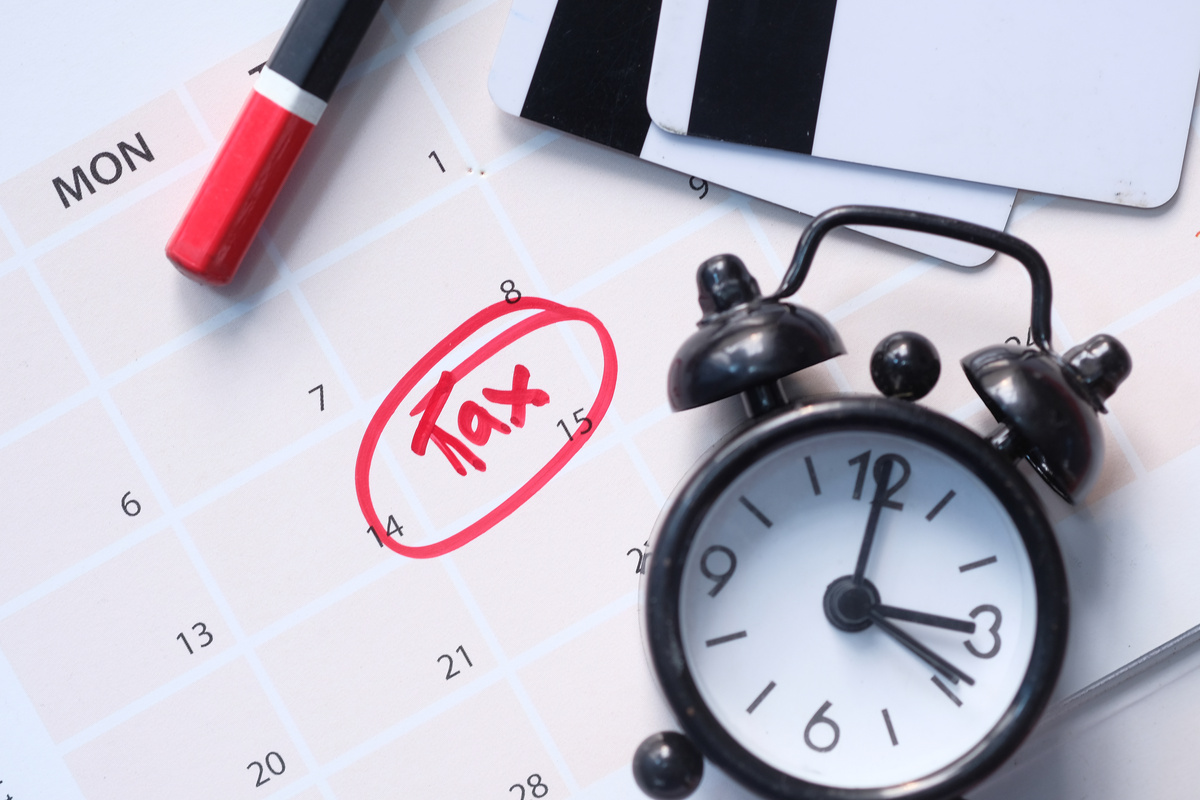
It's that time of the year again, Tax-Time it's just around the corner.
Don’t put it off or file it in the too hard basket, start now with our,
6 Top Tips!
- Getting ready is about getting your ‘house’, Business in order. Start by organising your paperwork. If you have a 'shoe-box' or bottom drawer full of unsorted papers now is the time to start sorting and filing.
- A stress-less tax time is all about good record keeping. You need to account for every dollar that comes in and out of your Business! Make sure you have the ‘evidence’ to back your claims!
- Missing copies of claimable receipts or expenses records, follow-up now to avoid panic later.
- Working from home, remote flexi arrangements, keep copies and record any related expenses for 'end of year' deductible claims.
- Have you checked if there are any Government incentives and initiatives for small Business? Have you received any concessions? If so, are there reportable implications!
- Do you have any questions regarding your Taxation obligations, not sure what a legitimate claimable expense is or are needing help with bookkeeping, payroll systems and processes! Contact Blackburn Accounting, we are 'Your Family Business Specialists'.
Read more...

With the ‘silly’ season fast approaching and the Festive and traditional Christmas celebrations already in coffee conversations, and decorations, tinsel in shop windows, now is the time to start planning and preparing.
If you are trading during this period now is the time to create and activate your Marketing Campaign.
Importantly, Get your Business House in Order, Sales and Customer ready
Checklist!
Tick the 8 boxes below to see how ‘ready’ you are!
- Be and stay organised:. If you are opening or closing during this period, don’t leave things to chance or memory. Make a Checklist/ Action Plan to ensure everything is covered and everyone is onboard. Examples such as advertised Trading hours, sales targets and payroll needs. Simple steps that help reduce stress and drama!
- Check Inventory levels: Take stock of all goods, look at previous years and current demands to gauge needs. Identify your best sellers, popular items! Critically, speak with your Suppliers to make sure your orders are covered. Other companies will be in the same situation so get in early.
- Staffing needs. Rosters, holiday leave, peak period coverage. Prepare asap. For example, do you need to train new staff, are experienced Team leaders available and do you have backup. This can be a stressful time. Take care of your employees with rewards, downtime and some festive activities to keep up morale. Who doesn't love Secret Santa!

Starting on the right foot, it’s critical if you are competing in the 100 metre sprint and equally critical if you are a small Business owner.
As we begin a New Year there are actions small Business can take to compete in the race and achieve the success they desire in 2025.
Get started with these 7 Actions
- Prepare, Plan for Success.
Schedule a Strategic Planning Day. The Team is returning refreshed, now is a good time to harness renewed energy into creating a Strategic Plan and roadmap. A Plan that can direct and inform all members. Importantly, with their participation it has buy-in from the entire Team. Buy-in, that provides the greatest chance for success with everyone starting off on the ‘right foot’.
- Check your Cashflow
Is your cash flow flowing or has it drained away during the festive period? Take action to replenish and fill any capital holes. Speak with your accountant or financer if needed. Importantly, contact your creditors, arrange payment plans and negotiate extensions with your Suppliers. Be upfront, don’t avoid or put it off before acting. Need help, speak with Blackburn Accounting we offer a range of services which include Cashflow Management, Family Business Management and Business Development.
- Review your Products and Customers.
Review your revenue and gross profit. What are your popular lines, best sellers? What are sleepers, do you need to make changes! Add, improve, keep, discard!
Review your customers' buying habits, consult with them, seek feedback. Value their input. These actions can help in determining your focus in 2025. This is also a good time to consider pricing. Are increases needed. It’s vital you keep on top of this during cost-of Business pressures and a challenging operating environment.
Read more...
November is the month of opportunity for planning to gain increased sales.
Attraction to the November Black Friday and Cyber Monday events has seen recent record sales and this month also heralds the lead into Christmas gift shopping and summer holiday, traditional Boxing Day sales.
According to a recent survey, the ‘Christmas tills will be ringing’ despite the current economic climate. Shoppers will be more frugal with cost-of-living pressures impacting but are still ready to buy.'
Whatever your Business if you want to get your share of revenue, follow these Tips. Increased sales equals increased revenue and who doesn’t want that!
It starts by understanding WHY November planning is crucial for Sales Success
Simpy said, with a range of opportunities you can't afford to miss out. Think strategic and back with sound planning and preparation to capture and gain market share.
Read more...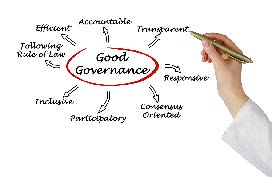 It’s a must-have essential item, fundamental to best Business practice. It’s not an accessory, something nice to have, nor, should it be ignored or tampered with!
Good governance applies to a wide range of organisations, including private companies, public sector agencies, local councils, family business and charities. The structure of your Business will determine many aspects of governance.
Good governance is not something that only big business should worry about. Good ‘professional’ governance is crucial for any small Business if it is to survive.
Simply put, strong corporate governance helps improve decision-making, reduce risk, and help build a foundation for sustainable growth and a positive reputation. It’s your internal system of checks and balances, a framework supporting and safeguarding stakeholder and your Business interests.
SME’s unlike large enterprises with a full Board of Directors, may instead rely on external consultants, or advisory boards but still with the same objectives, that leadership decisions support the Business ‘health’, satisfying all legal requirements and moral obligations.
7 Key ingredients for effective governance are
-
Clear Roles & Responsibilities: It starts here. Everyone involved in the Business should know and understand their responsibilities, what that means, and where their authority starts and ends. Importantly, their legal and ethical requirements and obligations.
-
Decision-Making: the processes must be transparent. Document how key decisions are made, by whom and why i.e who has authority, who is responsible, who can sign and where decisions are recorded. There should be a clear and open path for all transactions.
-
Ethical Conduct: adopt and implement clear codes of conduct (written & unwritten), to inform and guide behaviour. Promote and educate parties concerning matters such as conflicts of interest. Take these steps to foster and build a culture of integrity.
 Your Accounting Partner
 Your Management Accounting Partner
 Your Expansion Engineer
 Your Special Projects Partner
 What is the state of our economy?
  From 1 October, 2026, Businesses can no longer add a surcharge for payment using Visa cards, Mastercard, American Express and EFTPOS cards.