



 Huge ego's, infighting, conflict, lack of team cohesion and dysfunction. There you have it Leadership, Leaders in disarray.
Political party chaos, has been playing out very publicly, on screens and in the media in recent weeks. Not a pretty sight and not good for politics or community morale! As citizens we expect our elected leaders to lead by example, a good example!
But this is a message and a problem that is not confined to the political arena. Leaders, Leadership Teams in disarray cross many boundaries.
So what are the answers, lessons for Business, Sporting organisations, and political parties that are experiencing similar symptoms? What are the steps to rebuilding teams and Leaders?
Firstly, why does this happen?
-
Ego and personality clashes
-
Lack of trust and respect
-
No shared vision and direction
-
Role ambiguity
-
Factional fighting
There you have it. What you end up with is dissolution, despair and disharmony!
You may have experienced this in a workplace, sporting group or any organisation as cohesion dissipates into disarray.
There is no direction, effective instruction and the Team is no longer a team! It's everyone for themselves!
Getting it back together!
6 Key Steps to Rebuild a Leadership Team in Disarray
-
Consider appointing an independent mediator to take the repair process forward.
-
Create an environment where all members feel safe to speak openly without retribution. Establishing psychological safety is crucial. Acknowledging past leadership failures can help with healing, but this step must be conducted constructively if there are lessons to be learned.
-
Rebuilding trust. Do this by holding individual sessions. This helps in better understanding members' perspectives and helps with building personal relationships. Nurture and foster strong working boundaries.
-
Redefine your Mission. The Team needs to reconnect with a shared vision and purpose. This is critical to re-establish the Team with a sense of ownership, meaning and belonging. Next, establish clear roles and responsibilities and ensure everyone understands their part in this new collective vision. Goal Setting & Planning follow this exercise.
-
Set Clear Roles with Accountability. Clearly defined roles and responsibilities are critical to avoid misunderstanding, potential conflict, and disconnection. Assign specific members to tasks and decisions with accountability and reporting requirements.
-
Establish healthy rules of engagement. Create an environment where differing views or ideas are accepted and debated. Where constructive, professional disagreement is harnessed to ensure the best decisions are reached. Transform a culture of ‘artificial harmony’ to one of unity with healthy engagement to get the best for all concerned.
Rebuilding a Leader.
Consider these Strategies:
-
Lead by example by having a presence, ‘walking’ around and engaging directly with the Team in their workplace. This fosters and builds trust, respect and loyalty.
-
Practice Service Leadership. This is being and acting as a support to the Team rather than just managing from above, top-down, as a director. Stand by your words and actions, hear their voices to bridge the gap.
-
Provide Team Development opportunities. Upskilling and opportunities for growth provide benefits for all: the employee, the team and the organization. Neglecting this hinders productivity and performance.
-
Focus on the Future. It's important to take the Team forward by focusing on future goals, solutions and opportunities. Acknowledge the past but avoid getting stuck there in ‘what -ifs or regurgitated negativity.
-
Restore Belief. Be authentic. Help rebuild morale and belief in self, team and the organisation by demonstrating strong values, work ethic and team culture. Take the time and effort to establish a strong foundation reinforcing shared vision and goals. Where everyone plays a part in the successful results.
The good news, Leadership Teams and Leaders can be rebuilt successfully and go forward to enjoy the benefits and rewards of united efforts.
Read more... Leading when you have the winning Team is commendable, memorable! Congratulations it all came together. Sit back, celebrate and enjoy the glory and success.
Flip the situation!
If you are the Leader of a group that has just experienced loss, setbacks and disappointment, whether it’s a football final, or a bid for a contract, when ‘teams’ lose, the impact can be devastating. Reactions vary and it’s easy to start the blame game or dwell on what-ifs.
This is where strong Leadership is vital to deal with the fallout of defeat. Supportive leadership to address the challenges, pick up the pieces, and rebuild. Importantly, it’s about taking the group with you, transforming the pain of loss into purpose.
4 Actions of Strong Leaders and Leadership:
1. Understand the emotional impact
-
Acknowledge disappointment, allow time for ‘grieving’
-
Give support, individually and the team
-
Demonstrate empathy
-
Address any fears or uncertainty
-
Provide access to mental health services
2. Rebuilding Morale
Read more... Good, effective, and great! Words to describe Leaders doing the job well!
Good leadership meets the required standards, gets the job done, and is effective. Great takes it to the next level by surpassing expectations, adds value effort and leaves a positive, lasting impact.
But, importantly, not to mince words, the key is to focus on the essential qualities of Leadership.
In a time of unprecedented change in both society and the Business world, driven by demographics and technology, the need for good and great leaders has grown. As the workplace and workforce have adjusted to modern habits and values, so too must leaders adjust to ensure their style remains relevant.
Let's look at some core leadership traits;
-
Leads by Example. In words, actions and behaviours. Respect is earned; stands by values and integrity to foster trust and build loyalty.
-
Has a shared purpose and vision; inspires, motivates, and positively influences. Has the power to bring others along willingly.
-
Demonstrates high emotional intelligence, recognising one size doesn't fit all in ways of working.
Read more...
 Yes or no, the question often arises, and the debate continues.
People of power, political influence, scholars, intellectuals and everyday people will most likely have thoughts or an opinion.
Consider the argument, it’s a complex one with key points supporting both sides.
Compare and contrast!
The born to lead position proposes inherent qualities, a natural propensity for leadership. ‘Traits’ are more likely to emerge in these leaders as given qualities, confidence, courage, charisma and the ability to inspire others. Personality and traits that predispose them to be leaders.
Such attributes and characteristics can be displayed at any age, from early childhood and beyond. Watch a group at pre-school, or on the playing field or later at a workplace and you will see these leaders.
Examples of gifted leaders include Nelson Mandela and Martin Luther King who developed into powerful leaders through experience. Both examples demonstrate leadership flourishes when nurtured.
On the other hand, made Leaders result from leadership skills gained through education, training and experience. Programs that support development and the opportunity to grow, improve and gain the necessary skills over time.
The role of opportunity and development in producing strong leadership can't be stressed enough. Birth right and inherited position don’t have to precursor effective leaders and leadership. Think of situations when you have seen those from diverse circumstances and sometimes disadvantaged backgrounds emerge as strong leaders. Our PM is one that grew up in humble beginnings but has risen to lead our country.
Environmental factors can and do play a part, hampering and influencing leadership development. COVID forced leaders to step up to deal with unprecedented events and challenges. Our Premier led by example, supporting a strong stance of protection for public welfare.
Read more... Ineffective management, inappropriate behaviour, and poor performance can cross all realms and boundaries of a Business. At the top or bottom of an Organisation bad behaviour can appear in various forms, shapes and ways, disrupting and sometimes creating toxic environments. Everyone is at the mercy of the damaging fallout.
Heed the warning! Be aware! In a world of changing community standards and expectations in the workplace around diversity, inclusion, safety, bullying and mental health, Executives and leaders who breach rules or overstep the mark can find themselves in hot water. No longer are power and abusive language management tools. CEO’s need to be the best version of themselves at all times and lead by example.
Simply put, we know effective performance and behaviour management fosters a harmonious and productive workplace that is beneficial for all concerned, employers and employees. To support that, strong systems and structures need to be in place.
Most importantly, it’s knowing what to do, how to prepare for, address and deal with any issues if they arise.
The following are common types of Leader bad behaviours.
-
Leadership deficiencies: lack of accountability, micromanagement, constant negativity, self-interest, and avoidance of responsibility.
-
Personality traits: rigid thinking, narcissism, psychopathic tendencies (manipulation, superficial charm), controlling) and being easily frustrated. Bullying is often a management method using exclusion, humiliation, and belittling staff.
Read more...
 If you have ever attempted to row a boat, that is, not taken a cruise on a luxury 5-star liner, you will know how challenging rowing can be! It requires specific skills of precision! You have to pull on two oars simultaneously with equal force to navigate the water, move your boat, and safely reach your destination.
Are you a Leader? The same is true. Consider this analogy!
The metaphor of two oars of leadership represents People and Results. A Leader must simultaneously balance the needs of their Team with business goals. It takes this blend to lead effectively while moving steadily forward.
Leadership is engaging other people, staff, and teams to deliver desired outcomes. Leaders operate within a system, an organisation that requires the commitment and energy of competing forces (Leaders and Teams) to deliver results. This can be described as a yin-and-yang existence. A relationship between leaders and followers with tension and complexity but with a focus on the same goals.
Simply put, when you lead, there are two basic dynamics at play. You have control of the oars, but effective leaders apply equal force to bring people along while also setting and meeting Business results. It's all about balance. Like a rowboat, if you pull too hard on one oar, you will spin around in circles, going nowhere. Sound familiar? Have you experienced that?
Come on board!
The People Oar
This oar focuses on the human, empathetic side of leadership. This means;
Read more... In a time of uncertainty, conflicting world events, politics and the rapid adoption of AI we are already seeing that 2025 is a time of disruption and it’s not ‘business as usual!
In this rapidly changing environment horizon scanning, course correction, agility and adaptability are important skills for Industry leaders.
A ‘typical’ small Business leader in Australia in 2025 is likely to be a tech savvy self-believing entrepreneur with a strong focus on digital marketing, the customer experience and sustainability.
Aligned with this profile is human-centred leadership that prioritizes employee needs, wellbeing and promotes practices to foster a safe, positive work environment. There is emphasis on diversity and inclusiveness within their teams.
What to look for. Do you recognize these attributes in yourself?
7 Key characteristics are:
- Tech savvy: includes keeping abreast of new technology, being open to improvement or if needed seeking advice from expert others. Example AI, what’s it all about, what does or can it mean for my Business!
- Digital fluency aptitude understanding and leveraging technology to drive innovation and decision making. Such as utilizing online platforms and social media applications. E.g. data analytics to reach customers, manage operations and respond to changing market trends.
- Agile and Adaptable: leads change, adopts flexibility in operations and strategy to respond to market shifts and emerging trends. Embraces continuous learning to stay relevant to meet the challenges of a changing landscape.
 The opportunity to step up to a Leadership role has finally presented itself.
Are you ready, do you have the necessary skills and abilities?
Stepping up to a leadership role requires a shift from managing tasks to driving strategic intent, developing talent, and embodying emotional intelligence. Effective Leadership demands building trust through respect and integrity and adopting an open and growth mindset to embrace change and the challenges presented.
Are you prepared?
If you have answered yes, you will have put in the hard work to transition from being a highly-praised manager or key Team player to developing the skills needed for a leadership position. You have done the hard yards, developed your skills and applied your qualities and traits that make for an effective leader.
Let’s look at 7 Vital Leadership Skills.
-
Mindset shift – focus on being a leader of others, focusing on organizational impact and outcomes. This takes a move from being a subject matter expert, task master, assigning and managing jobs.
Read more...

Lessons in life and Business come from personal, learned experiences, peppered with successes, failures and everything in between.
And we know leaders come in all shapes and sizes and leadership has many styles. Amongst those are the ‘self-taught’ leader.
These are the self-starters, self-motivated that often morph or merge into leadership positions, often beginning on the job, at the coal-front of Business or as small Business owners. Many don’t start at the top but go about their tasks with commitment forging a pathway that fosters development and growth.
Characteristics, traits and habits include:
- self-directed
- self-belief
- interested and open to learning
- flexible
- resilient
A desire to go further, gain skills and knowledge, improve and succeed drives their endeavours, sometimes in small steps but still with purpose and an end goal.
If you are a small Business owner, ‘self-made’, you might recognise yourself.
And speak with ‘self-taught’ ‘successful’ leaders and many will share the following 7 ‘takeaways’.
Read more...
Setbacks are inevitable, but as a leader how you respond to them is the difference in how the situation plays out. Your reaction influences the outcome. Bury your head in the sand, give-up, or react without thinking will not solve the problem.
But you can turn the situation around! By acknowledging the setback, reframing it as a learning opportunity and focusing on solutions is a positive and productive way to move forward. You can face and overcome the challenge, build resilience and in doing so, lead by example and inspire your team.
4 Ways to Turn Setbacks around!
- Acknowledge and Accept the Setback:
Acknowledge the reality that setbacks occur, don't shy away. Step up as a Leader accept what's happened and face the issue. Take time and delve into understanding the issue, get the full picture then focus on seeking and finding solutions. Plan and develop a course of action. Reflect to learn but don’t waste time dwelling on the what ifs or might have been.
- Reframe the Setback as a Learning Opportunity
Life throws us many challenges, both in our personal and professional fields. As a Business owner most likely you will and have experienced setbacks. The COVID pandemic an example. It certainly turned our lives and economy on our heads. Smart operators have used that horrific setback as a learning opportunity. They reframed the challenge, focused on the positives, identified the strengths and lessons learned from the experience. Example, Joe’s café was ‘tested’ with COVID distancing and lockdown rules. With no in-house business Joe had to find solutions and look for opportunities. He did so, by baking takeaway dinners and selling them direct from the refrigerator. Phone, click and collect sales soared and he was able to trade his way through this setback. He turned the situation around!
Read more... Listen to the coffee and backroom chatter and you will find the common perception is that leadership is all glitz, glamour and perks! Listen up! That is indeed a misconception!
In reality, leadership involves hard work, tough decisions, and routines punctuated with often challenging and unexpected events. There’s more grit than glitter! If you were a Leader during the uncertainty and disruptions of the COVID epidemic, and more recently, US tariff threats, you would know it isn’t glitzy or glamorous, sprinkled with perks.
Strong leadership can be best described as gruelling, demanding, with a raft of responsibilities that often require significant personal change and sacrifice. Simply said, leadership never ends. It’s a continuous journey of highs, lows, wins, and losses requiring self-reflection and improvement to be a true, effective leader.
The unglamorous realities of Leadership include:
-
Accountability: The buck stops with you. The Leader is ultimately responsible for their team's successes but also accountable for failures. The pressure can be immense, requiring reporting to a range of stakeholders.
-
Difficult decisions and hard calls. The leader carries the burden of being the bearer of bad news. Announcing job cuts, cancelled projects, and having awkward conversations are all part of the role. This emotional baggage can end up falling on the leader’s shoulders, not seen but felt.
Read more...
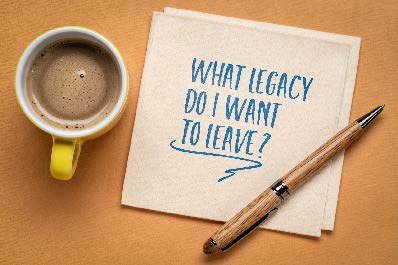 In simple terms, leaving a legacy is ‘something’ handed down from the past. Depending on the context, it can be the impact on future generations, the inheritance of property or money, or outdated technology.
If we zoom in on this description, the takeaway is that true legacy is not about monuments, glory, fame, or wealth. A true positive legacy is the lasting imprint you leave behind through the values you instil, the lives you touch, and the positive impressions you make. These are enduring and intangible contributions.
In Leadership and all walks of life, leaving a memorable legacy for all the ‘right’ reasons is something money can't buy, or win in a raffle!
In recent weeks, we have seen this true example of legacy demonstrated in the words and actions of two renowned people: an ex-footballer and a cancer research professor. Both were cast into the public spotlight for their heroic and staunch stand against adversity, fighting for their lives against terminal illness.
But it is the way they went about this fight that has inspired so many. Both displayed and demonstrated behaviours that won the hearts, support and following of many, including family, friends, communities, and strangers.
Read more...
 We know leaders and leadership styles come in all shapes and styles, this month we put Kakistocracy in the spotlight.
Kakistocracy has its origins in politics and government, with associated commentary, ‘leadership by the ineptest or least competent’. Described as ‘a government run by the worst, least qualified or most unscrupulous citizens’. English author Thomas Love Peacock in 1829 using the term as the opposite of aristocracy, meaning ‘excellent’ in Greek.
Kakistocracy is a leadership style driven by favouritism, not progress, occurring when those rising to the leader position do so on charisma rather than skills and capability. Appearances and ego lead over expertise and meaningful outcomes. It’s all about self-interest and ineptitude is part of an incompetent skill set.
In modern times it appears and is evident in a range of organizations, from big corporations to small Business, community and non-profit groups.
Features of kakistocracy leadership:
- Organizations that are directionless, often floundering under Management without clear purpose.
- Leaders surround themselves with like-minded supporters that go with the flow, don't speak, while dissenting voices are ignored.
- Decision making becomes insular, reactive, and poor decisions are overlooked. The resulting fallout is flourishing incompetence stifling creativity, morale and innovation.
- Boards, Governing Bodies and Committees may sidestep the challenges of responsibility and accountability, valuing loyalty instead. This avoidance leaves those ill-equipped to lead still leading.
How to avoid kakistocracy in your Company
Read more... Big Business, small Business, Sporting organizations and everything in between, when it comes time to identify potential or new Leaders, what are the secrets to successful Leadership transition? Importantly, what makes Succession Plans work?
In reality, successful succession isn’t simply following a plan. Transition and successful succession are about honestly assessing what the organisation needs next, what it needs to take it forward.
That raises questions, ‘who’s in the room? Is the ‘nominated’ candidate suitable and prepared, able to deliver that? Answer, sometimes yes, sometimes no!
Read on!
Family Businesses, and you may be one of those who have realised the importance of Succession Planning and taken the necessary steps for a smooth transition. You will have instilled family values, strong governance structures and supported all family members to nurture their aspirations and ambitions. Role rotation, training, and shared opportunities are important to achieve this outcome. Everyone is a winner!
Examples of succession plans that have worked where highlighted in the story of leadership transition headlined, ‘WA Cricket’s belief in coach Adam Voges is a perfect blueprint on how to get it right’. In this article, Voges was praised as ‘he epitomises excellence in the world of head coaching’.
Other examples.
Read more... Crisis and crises do occur despite the best laid plans! And they happen in all streams and areas of life, Business, leisure and personal.
As a Leader, a crisis brings additional layers of complexity, responsibility and difficulty, as you are called upon to act effectively. Your Team and employees look to you for guidance, support, and answers!
Most successful Leaders embody a range of certain traits and capabilities, adapting their leadership style to best respond to the needs of a specific situation. They can inspire, influence,and know how to act decisively.
This moment has arrived. Are you prepared, equipped? Do you see yourself in the following?
Research and feedback from various workforces have identified the following 7 qualities, capabilities and actions they want Leaders to demonstrate in times of crisis.
-
Calmness is key under pressure: Keeping a level head and staying composed will help avoid panic reactions. Displaying patience and being mentally stable will reduce anxiety and create a less stressful environment for all. The opposite, agitation, being rattled and overly excited, will have a detrimental impact on everyone.

With the start of a new financial year, it’s the perfect time to revisit your vision, aspirations and goals.
It starts with shaping and creating your year to achieve the best you can be in Business and in life.
Fulfilling your hopes and goals, can be challenging, particularly in the current economic environment and cost of living pressures. It’s a ‘testing’ time and you are not alone if you are finding yourself feeling a little deflated or sometimes almost defeated.
What to do! It’s more than just keeping going, it’s how to bounce back!
There are steps you can take!
6 Steps to Building a Better, BEST ever year!
- Believe it's possible!
Self-belief, and belief in others are the foundations of success, achieving your dreams. This isn’t about wearing rose coloured glasses or burying your head in the sand. It’s about facing the facts, building resilience and having the courage to believe.
To quote from Alice in Wonderland; ‘Alice laughed: ‘There's no use trying,’ she said; ‘one can't believe impossible things.’ ‘I daresay you haven't had much practice,’ said the Queen. ‘When I was younger, I always did it for half an hour a day. Why, sometimes I've believed as many as six impossible things before breakfast.’
For most of us, life isn’t a fairy-tale!
BUT the power of belief in the ‘possible’ shouldn’t be dismissed or underestimated.
- Know, Find your Why.
What makes you happy, fulfilled. Know the why, and what success means and looks like! Personal interests, career and more, whatever your endeavours know the measure of your happiness and fulfilment. Monetary reward can be included but it’s that deep feeling of satisfaction, along with energy and excitement that are true indicators of fulfilment.
- Attitude is everything.
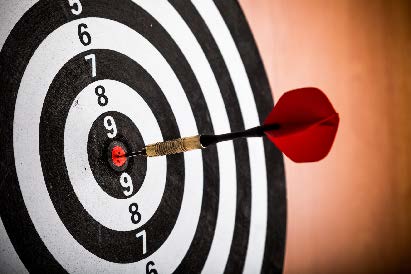 You will know if you are hitting the mark, and, conversely, you will know if you‘re not!
Many of you, I am sure, will relate to that sentiment. And many of you have navigated and cut through the hype around this topic and what it takes to be successful.
Let‘s unpack this!
Marketing is a long-term, comprehensive strategy of identifying customer needs and positioning a product to meet them. Advertising is a subset of marketing, a direct, paid promotion of a product or brand to create and raise awareness. They work together.
-
Marketing is the research, driving the ‘what and why’
-
Advertising actions ‘where and when’.
Hitting the mark in these activities takes a strategic and balanced approach, merging long-term brand building with short-term tactics to reach audiences effectively.
For success in 2026, trends highlight the need for ‘proof over promises’, words, images and initiatives that focus on authenticity, trust, and combining human creativity with AI technology. Success depends on creating emotional connections using data responsibly and ensuring cross-channel consistency.
Read more...Big Mac helping understand cost of living pressures
The humble burger, the Big Mac is affected by the cost-of-living crisis! But if you are a regular Mac Burger eater you already know that!
We know from the tracking system, the Big Mac index. It measures prices across 55 countries as a way of keeping an eye on the global economy.
You may recall back in March we presented ‘the Humble burger! A great takeaway meal or measure of Business success.https://www.blackburnaccounting.com.au/blog/218-the-humble-burger-a-great-takeaway-meal-or-measure-of-business-success.
But, How, what’s driving up prices today
Let’s start back in 2017 a Big Mac cost $5.80 in Australia. And year by year the price crept up in small rises reaching $6.15 in early 2019. This was prior to inflation that sent us into a cost-of-living nightmare. By 2020 prices steadily increased then the pandemic hit!
Surprise, can you believe, with consumers stuck at home the cost dropped for the first time in years. Price stayed around $6.40 until 2022 when the cost-of-living crisis hit. Nothing was sparred, goods, essentials like toilet paper and services, plumbers, dentists, all visits started costing more! Ah yes, painful, at the dentist and checkout!
And the humble burger didn’t escape!
Let’s look more closely at what’s been happening.
Across the globe this treat, with the same basic ingredients, bun, beef patties, single slice cheese, pickles, onion, lettuce and blob of sauce is produced at an industrial scale. It’s a mass-produced commodity, linked to the intricacies of the global economy. Suggested by associate professor of economists ‘if the price of a Big Mac’ is moving there’s something really strong going on in the economy at large’. And don't we know that!
It’s basic economics 101! When McDonalds has to pay more for its ingredients it passes those costs onto consumers. With a smorgasbord of ingredients making up a Mac, including beef, special sauce, wages, rents, Royalties and intellectual property. The list goes on, nothing is spared!
Examples, bread prices rose, cheese too, add electricity costs. With all corners of business expenses rising - It is forcing sale prices up.
Inflation, cost of living, watch this space for more and follow the Big Mac index!
Enjoy your Big Mac!
Read more...- Are you planning your next Conference or Finance Workshop?
- And are you looking for a ‘Professional someone’ to lead it?
- Need, want, an experienced, Presenter, Facilitator or Keynote Speaker?
Yes?
Who to contact?
Let me introduce you to Tim Blackburn, Accountant.
Tim is experienced in all these areas and skilled in public speaking and well equipped to present, facilitate or deliver a keynote speech.
And Tim is ready and available to make your next event the success you want it to be!
Profile:
- Director and founder of Blackburn Accounting
- CPA qualified accountant
- acknowledged public speaker
- active Member Toastmasters International
- Past Director Toastmasters WA.
- Past President WA Div of CPA Australia
Workshop Services:
Tims style
- develops the Workshop Program tailored to suit your requirements.
- prepares the materials and delivers content designed to meet the desired outcomes.
- focus on meaningful connection and interaction with audiences

Technology, YES, it has redefined the way we do business and will continue to do so! It’s a fact.
Smart Small Businesses are getting on board adopting various technology solutions to harness digital transformation to support and enable Business growth and efficiency. If you are a Small Business owner, you can’t afford not to take-up what Technoloy offers, the benefits it brings to keep you competitive, by running your Business more smoothly and effectively.
Are you one of them!. Keep reading to find out more, why and how Small Business should take on Technology today!
Technology, is described as ‘the application of scientific knowledge for practical purposes, especially in industry.’ (def: Oxford languages).’ And no-one can dispute its application.
From the earliest beginnings of stone tools, fire and weapons to the present day with advances in artificial intelligence, virtual reality, blockchains and robotics, technology has continuously changed and transformed our lives.
It was Technology that came to the forefront as we sought answers to counter the impact of COVID. The pandemic fallout brought changes to how we did business, bought, sold and delivered. It reshaped how, where and when people worked. With lockdowns and restrictions Online digital operations became the norm. Going forward, these practices along with technological developments are the new world order.
5 Reasons Why Every Small Business should take on Technology today
- Tech plays a crucial role in redesigning and reinvigorating a Business
- Tech can save you time, money and effort by streamlining systems & processes
- It takes the hassle out running day to day Business operations through more efficient data collection and analysis, offers better customer support and improved organisational infrastructure
 Your Accounting Partner
 Your Management Accounting Partner
 Your Expansion Engineer
 Your Special Projects Partner
 What is the state of our economy?
 From 1 October, 2026, Businesses can no longer add a surcharge for payment using Visa cards, Mastercard, American Express and EFTPOS cards.